
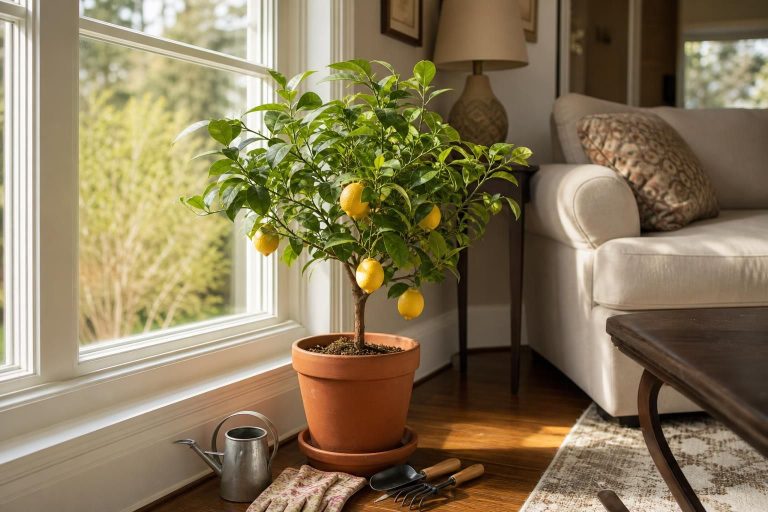
Indoor citrus succeeds when you match the tree to the space instead of trying to squeeze a full-size orange or lemon into a living room. The practical formula is simple: choose a naturally compact or dwarf citrus, place it in the brightest window you have, use a pot with drainage, and water only when the top 1 to 2 inches [2.5 to 5 cm] of mix feels dry. With that setup, fruit indoors is realistic in many bright US homes.
The varieties below are the ones to look for when you want indoor citrus trees that stay manageable in containers. Each one has a better chance of handling pot life and indoor conditions than a large standard tree, and each gives you something useful in return, from sweet-tart little oranges to fragrant lemons and limes. By the end of this list, you will know which tree fits your light, your floor space, and your patience level.
What indoor citrus needs before variety even matters
For container citrus, light is the first checkpoint. Aim for at least 6 hours of direct sun daily, with 8 hours being better for flowering and fruit set. A south-facing window is usually the strongest option in a US home, followed by a bright west-facing one. If the tree starts leaning hard toward the glass or dropping older leaves in winter, low light is usually the first thing to question.
Drainage is non-negotiable. Use a pot with at least one large drainage hole, and never let the nursery pot or decorative cachepot hold standing water for more than about 30 minutes after watering. Start small rather than potting up too aggressively. A new tree usually does better in a container only 1 to 2 inches [2.5 to 5 cm] wider than its root ball. Oversized pots stay wet too long and often lead to root trouble.
Feed during active growth. A practical home schedule is a citrus fertilizer from early spring through late summer, following the label rate, or a half-strength liquid feed about every 2 to 4 weeks while the tree is pushing new leaves. Hold back in late fall and winter when growth slows.
If your summers are warm, most dwarf citrus benefit from outdoor time once nights stay above about 50°F [10°C]. Move them out gradually over 7 to 10 days: bright shade first, then morning sun, then longer direct sun. Bring them back in before cool nights arrive.
Seven compact citrus trees that are better suited to indoor growing
1. Calamondin orange
Calamondin is one of the easiest entry points into dwarf citrus. It stays relatively compact in a pot, often manageable at about 3 to 6 feet [0.9 to 1.8 m] indoors with pruning. Give it 6 to 8 hours of direct sun. The fruit is small, orange, and tart, with juicy flesh that works well when you want a sharp citrus flavor rather than a sweet snack fruit.
This is a good pick if you want ornamental value too, since the glossy leaves and bright fruit look good even between harvests. Keep the pot evenly moist but not constantly wet.
2. Meyer lemon
Meyer lemon is a classic choice for fruit indoors because it is more compact than many standard lemons and adapts well to containers. Indoors, it often stays around 4 to 6 feet [1.2 to 1.8 m] with pruning. It wants 8 hours of direct sun if possible. Expect rounder, thinner-skinned yellow fruit with a milder flavor than a grocery-store standard lemon.
Meyer lemon often blooms generously, and the flowers are fragrant. If your air is still and there are no insects around, transfer pollen by gently touching the center of one flower with a small dry paintbrush or cotton swab, then brushing the next flower. Midday is a practical time to do it when flowers are fully open.
3. Key lime
Key lime can work well in pots if you have strong light and a warm room. Expect a smaller tree, often around 3 to 5 feet [0.9 to 1.5 m] indoors. It needs at least 6 hours of direct sun, though more is better. The fruit is small, thin-skinned, and aromatic.
Because limes can be sensitive to cold drafts, keep them away from frequently opened winter doors and from heat vents that blow dry air directly on the leaves. If leaf edges brown while the soil is still being watered correctly, dry indoor air may be part of the problem.
4. Bearss lime
Also called Persian lime in many garden centers, this is the familiar larger green lime and a useful choice if you want everyday kitchen fruit. In a container indoors, expect roughly 4 to 6 feet [1.2 to 1.8 m] with pruning. Give it 8 hours of direct sun for the best chance of flowering and holding fruit.
It can outgrow a small apartment corner faster than calamondin, so this is one to buy only if you truly have a big bright window and room for a wider canopy.
5. Kumquat
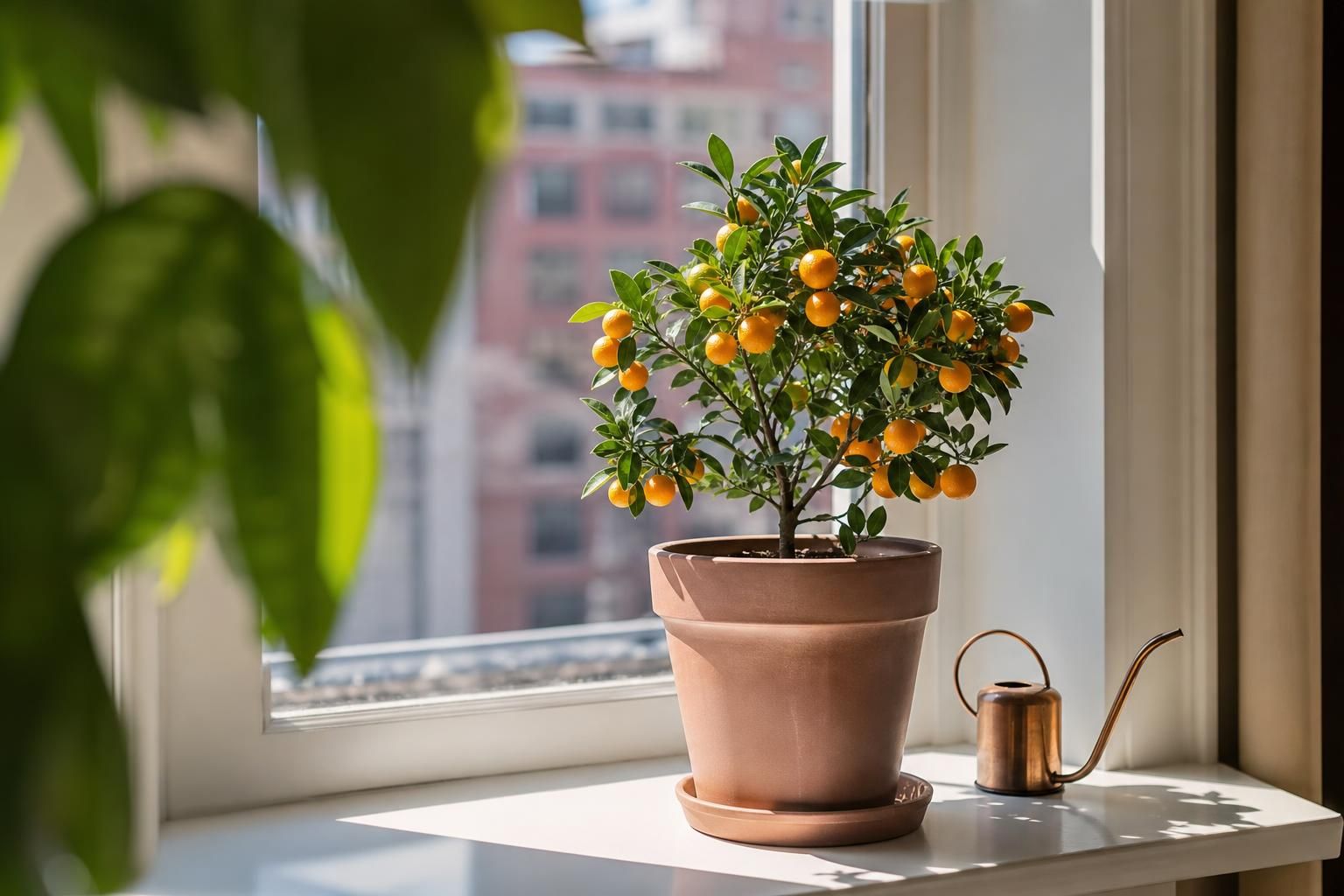
Kumquats are among the best sunny window plants for people who want compact edible trees. Many stay around 3 to 5 feet [0.9 to 1.5 m] in containers. They need 6 to 8 hours of direct sun. The fruit is small and oval or round depending on variety, and the peel is the sweet part while the inside is tart.
Kumquats are useful for smaller rooms because they tend to remain tidy and naturally dense. If the branches get crowded, remove a few crossing twigs in late winter or early spring so light can reach the center.
6. Satsuma mandarin on dwarfing rootstock
Satsuma mandarins are worth considering if you want sweeter fruit, but this is where variety choice matters. Look specifically for a plant sold as dwarf or clearly intended for containers. Indoors, a dwarf form may stay around 4 to 6 feet [1.2 to 1.8 m] with pruning. It needs 8 hours of direct sun. Expect easy-peeling orange fruit when the tree is mature enough and conditions are bright enough.
This is not the best choice for a dim room. If your brightest window only gets brief direct sun, choose calamondin or kumquat first.
7. Buddha’s hand citron
If your goal is fragrance and a striking conversation piece, Buddha’s hand citron earns its place on the list. It can still get fairly large over time, so it is best for homes with vertical space and strong light. Indoors, plan for about 4 to 6 feet [1.2 to 1.8 m] with pruning. It needs 8 hours of direct sun. Instead of juicy segments, the fruit forms finger-like sections with a highly fragrant rind.
This is not the tree to buy if you mainly want regular juice fruit. It is best for cooks who will use zest or perfumed peel.
How to keep citrus healthy through winter indoors
Winter is where many indoor citrus trees stall. The three big pressures are lower light, drier air, and slower water use. Move the pot as close as practical to your brightest window without pressing foliage against freezing glass. Rotate the tree about a quarter turn once a week so it grows evenly.
Water deeply, then wait. A good routine is to water until excess runs from the drainage hole, empty the saucer, and then check again only when the top 1 to 2 inches [2.5 to 5 cm] has dried. In winter that can mean much longer gaps than in summer. Yellowing leaves plus wet soil usually point to overwatering more than thirst.
For dry air, group plants together, use a pebble tray that keeps the pot above the water line, or run a humidifier nearby. What you want to avoid is blasting the tree with forced hot air from a vent. If flower buds form and then drop, look first at light changes, missed watering, or sudden dry heat.
Buying and potting choices that make or break indoor fruiting
Choose a young, healthy tree with glossy leaves, no sticky residue, and no standing water in the pot sleeve. Read the plant tag carefully. One of the most common mistakes is buying a citrus that eventually wants to be much larger than the room allows. If the tag does not mention dwarf growth, container culture, or a compact habit, ask before buying.
Use a loose potting mix meant for containers, not garden soil. After repotting, keep the crown of the plant at the same height it was in the nursery pot. Do not bury the trunk flare. Water once thoroughly to settle the mix, then let the surface begin to dry before watering again.
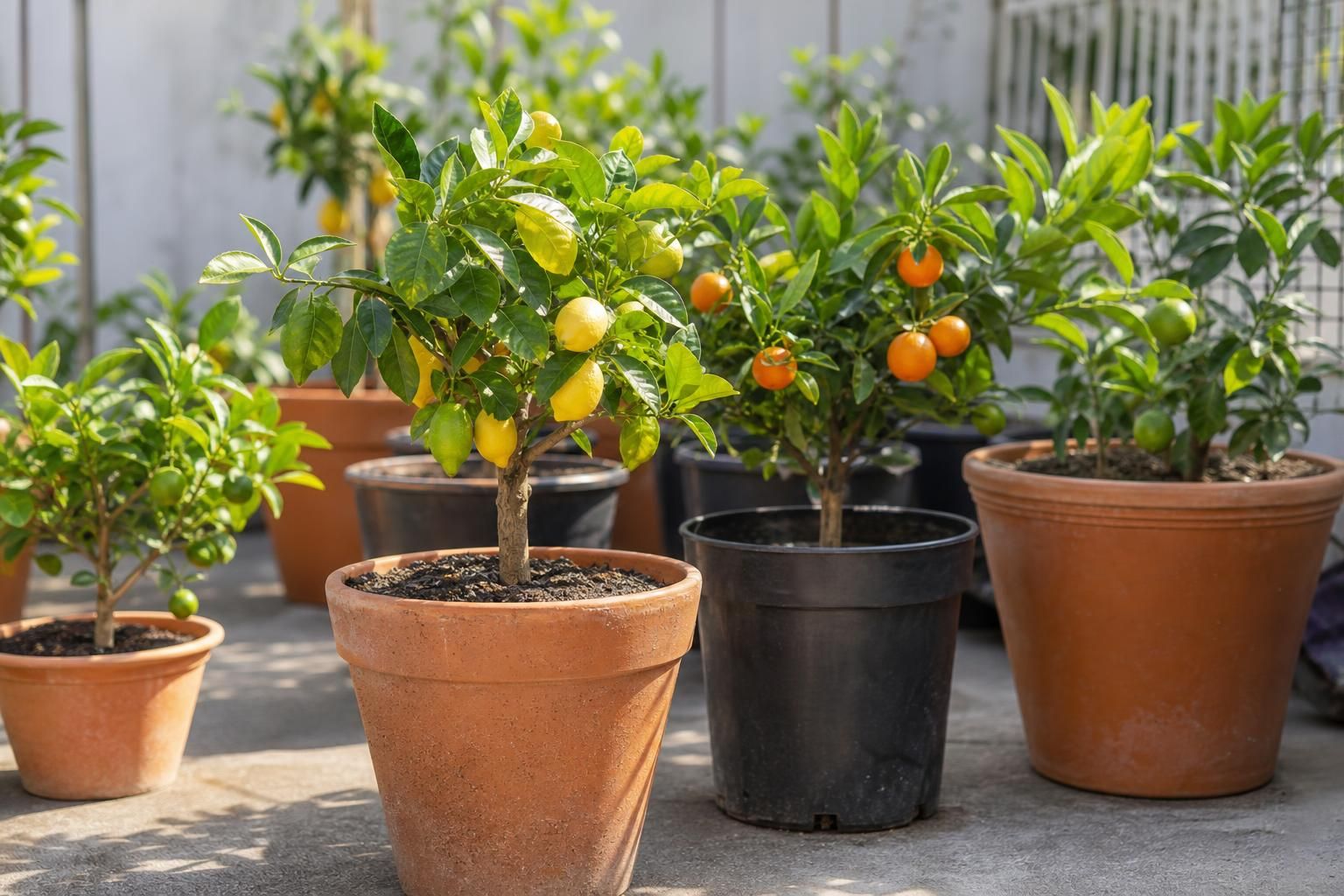
Another easy mistake is chasing fruit too fast. In the first season, a small tree may do better if you let it focus on roots and leaves instead of carrying a heavy crop. If a very young plant sets lots of fruit, thinning some of it can keep branches from bending or stalling.
If you have a bright south window, room for a 3- to 6-foot potted tree, and the discipline to avoid overwatering, indoor citrus is a realistic project. Start with calamondin, kumquat, or Meyer lemon if you want the most forgiving path, then move on to limes or sweeter mandarins once you know how your home handles winter light.