
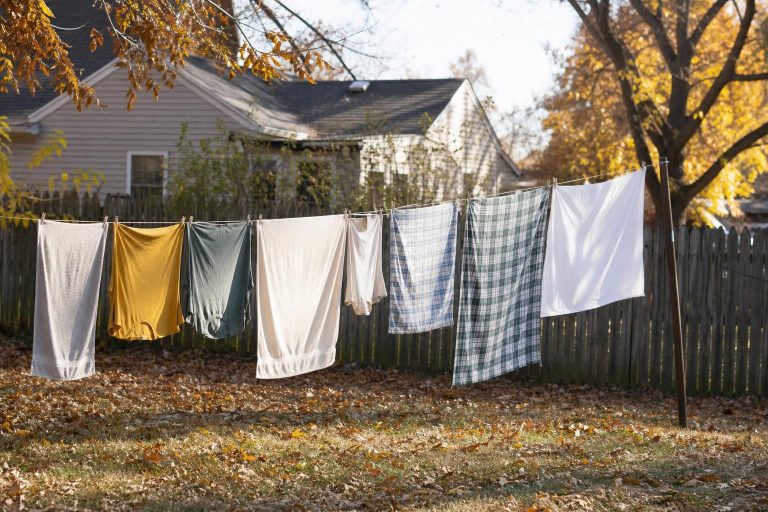
Autumn laundry can dry beautifully outside, but the timing matters more than many people expect. The best window is usually late morning through mid-afternoon, after any dew has dried and before evening moisture returns. If the ground feels dry, the air is moving, and the forecast stays clear of mist or drizzle for several hours, that is your cue to hang a load.
What matters most is not whether the day feels cold. To dry laundry outdoors in fall without a stale smell, you want three things working together: bright light, moving air, and relatively dry conditions. In practical terms, that often means waiting until about 10 a.m. to 3 p.m. on a usable autumn day, giving clothes enough time to lose most of their moisture before sunset. If anything is still cool or slightly damp by late afternoon, bring it in and finish it indoors with airflow rather than leaving it outside into evening dampness.
Why autumn laundry turns musty so easily
That musty smell usually starts when fabric stays damp for too long. In autumn, the problem is not just cooler air. It is the combination of shorter days, weaker sun, heavier overnight moisture, and longer periods when fabric never gets fully dry.
A load can look almost dry and still hold moisture deep in seams, waistbands, towels, hoodie cuffs, socks, and thick hems. If those areas stay damp for hours, odor can develop. That is why a breezy 52 F afternoon can dry laundry better than a still, gray 65 F day.
For clothesline drying in fall, think like this:
- Sunlight helps warm fabric surfaces, especially dark items and heavier cotton.
- Airflow removes moisture from the fabric faster than still air does.
- Drier conditions matter more than raw temperature. Cool but crisp often beats mild and damp.
If the air feels heavy, the lawn is wet, and leaves or branches are barely moving, your laundry is likely to stay damp too long.
How to pick the best drying window on an autumn day
The safest outdoor drying period in many US households is after the morning moisture is gone and before the sun drops low. For most loads, start checking conditions in late morning, then hang as soon as the yard has dried off.
Good outdoor drying signs you can verify at home:
- The ground is dry. Walk across the patio, deck, or path. If your shoes stay dry, conditions are improving.
- There is visible air movement. Leaves flicker, a flag lifts, or lightweight fabric on the line shifts gently.
- The sky is bright enough to cast a soft shadow, even if the day is not fully sunny.
- No mist, drizzle, or fog is in the next few hours.
- The temperature is steady or rising, not sliding toward evening chill.
Less useful windows:
- Early morning, when dew may settle back onto clean fabric.
- Late afternoon into sunset, when humidity often rises again.
- Still, overcast days when the line gets no breeze at all.
As a rough household guide, light items like pillowcases, T-shirts, and thin cotton pajamas may dry outside in 2 to 4 hours under bright, breezy autumn conditions. Heavier pieces like jeans, bath towels, sweatshirts, and sheet corners may need 4 to 6 hours or more, and some will still benefit from an indoor finish.
What to check before you hang a full load
Before you commit a whole basket of autumn laundry to the line, do a fast three-minute check outside. This small habit can save you from rewashing a musty load.
- Touch a railing, table, or the top of the dryer vent cover. If it feels damp, wait.
- Look at shaded areas of the yard. If those spots are still holding moisture, the air may still be too wet.
- Hang one small item first, such as a dish towel or T-shirt, for 20 to 30 minutes. If it feels cooler and wetter instead of lighter and drier, conditions are not right yet.
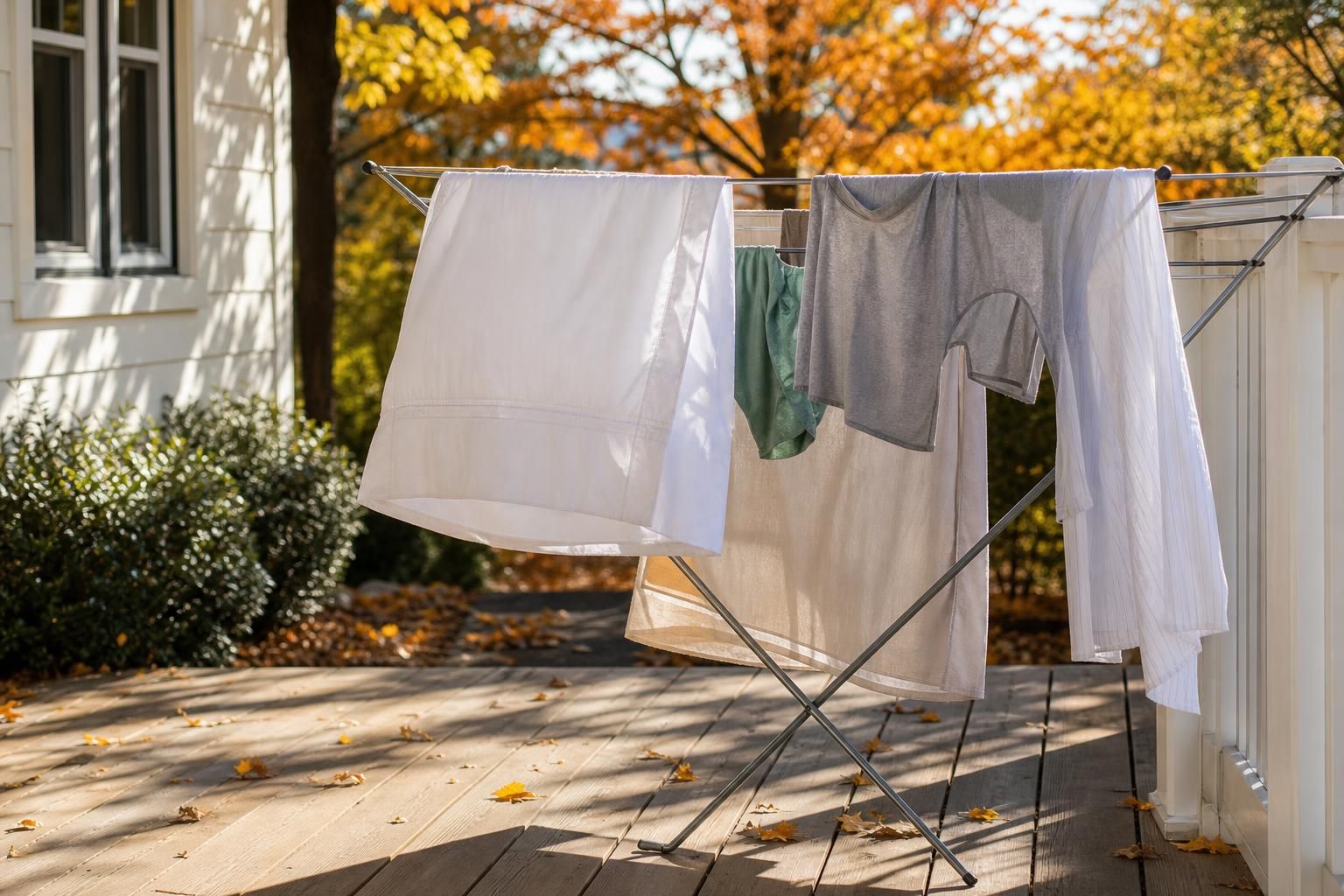
Try to start with laundry that has been spun well. If your washer offers an extra spin, use it for towels, jeans, sweatshirts, and bedding. Removing more water indoors gives autumn air less work to do outside.
You can also sort by fabric weight before hanging:
- Best candidates: shirts, children’s clothes, pillowcases, kitchen towels, workout wear, and sheets.
- Use caution: denim, thick fleece, bath towels, robes, and heavy hoodies.
- Often best finished indoors: bulky blankets and very thick cotton layers on borderline days.
How to hang clothes so they actually dry instead of just airing out
One of the biggest mistakes in fall home care is treating the line like a second laundry basket. If items overlap or bunch together, moisture gets trapped and the fabric may smell flat or damp even after hours outside.
For better drying:
- Leave at least 2 to 3 inches [5 to 8 cm] between light items.
- Leave 4 to 6 inches [10 to 15 cm] between thick items like jeans or sweatshirts.
- Shake each piece sharply 2 or 3 times before pinning it up.
- Hang shirts from the hem when possible to reduce shoulder pin marks and improve airflow through the body.
- Open towels fully instead of folding them over the line in thick layers.
- Turn jeans or sweatpants so pockets face outward and can vent.
If you are using a folding rack outside, avoid filling every bar. Use every other rung for thick pieces so air can move around them. On a line, put the heaviest items where the breeze hits best, not tucked between smaller pieces.
Midway through drying, flip or rotate large items if needed. A towel that has one edge wrapped over the line may dry more evenly if turned after 1 to 2 hours.
When to bring laundry in and how to finish it indoors
The safest rule in autumn is simple: if clothes are not dry by late afternoon, bring them in before the air turns damp. Waiting for “just one more hour” near sunset often causes the exact musty smell you are trying to avoid.
Bring laundry inside if:
- The fabric feels cool and slightly heavy instead of light and crisp.
- Shadows are lengthening and the sun is dropping behind trees or houses.
- The breeze fades and the air starts to feel damp on your skin.
- You notice cuffs, waistbands, seams, or towel hems still feel moist.
The best indoor backup is not a heap over a chair. Instead:
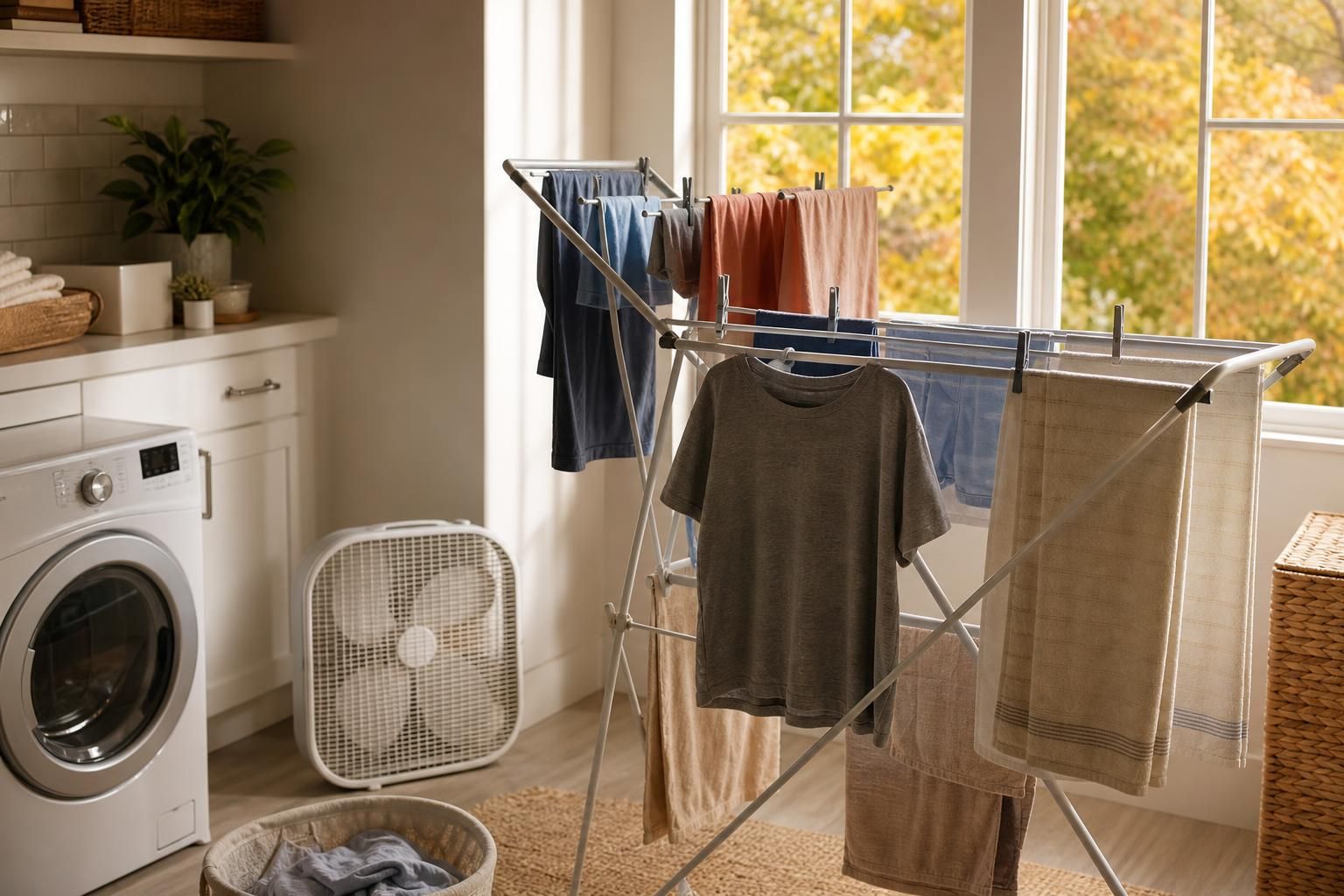
- Move items to an indoor rack with 2 to 3 inches [5 to 8 cm] of space between pieces.
- Set the rack near a heating vent, sunny window, or ceiling fan if available.
- Run a portable fan on low or medium aimed across the rack, not directly pressed against one spot.
- Open an interior door or crack a nearby window slightly if the indoor air is dry enough for ventilation.
If you prefer, you can finish almost-dry items in the dryer for 10 to 20 minutes on a low or medium setting, especially towels and denim. That short finish is often enough to remove the last hidden dampness from thick seams and corners.
Common autumn line-drying mistakes that lead to stale-smelling fabric
Several small habits can undo an otherwise good drying day.
Hanging too early
If the yard is still wet with dew, your laundry starts the day in damp air instead of drying air. Waiting even 60 to 90 minutes can make a visible difference.
Overloading the line
A crowded line slows airflow around every piece. If the basket is large, split it into two rounds and dry the lightest items first.
Putting thick items in the center of the load
Bulky clothes trap moisture around neighboring pieces. Give heavy items the breeziest outer spots.
Leaving items outside after sunset
Even laundry that seemed nearly done can pick up moisture again in the evening. This is one of the most common reasons people avoid musty clothes only to smell dampness later in a closet or drawer.
Folding before checking hidden spots
Before bringing laundry fully indoors, feel the thickest parts: waistbands, underarms, pocket seams, towel hems, fitted sheet corners, and sweatshirt cuffs. If those areas are dry, the rest usually is too.
Outdoor drying can still work well deep into fall when you choose the right hours. Aim for the driest, brightest, breeziest stretch of the day, give each piece room on the line, and stop before evening moisture returns. That approach keeps autumn laundry smelling clean and fresh without relying on guesswork.